The garden looked perfect on paper. A smooth rectangle of lawn, two straight borders, a terrace drawn like a ruler stroke from the back doors. Estate agents call it “low maintenance”. You stepped outside the first spring and realised it translated roughly as “completely flat and strangely boring”.
You stand there with your mug of coffee, staring at all that level green, and feel… nothing much. Your eye glides from fence to fence with nowhere to stop. No drama, no surprise, no reason to walk to the end. It’s a garden you look at from the kitchen window, not a place you wander into.
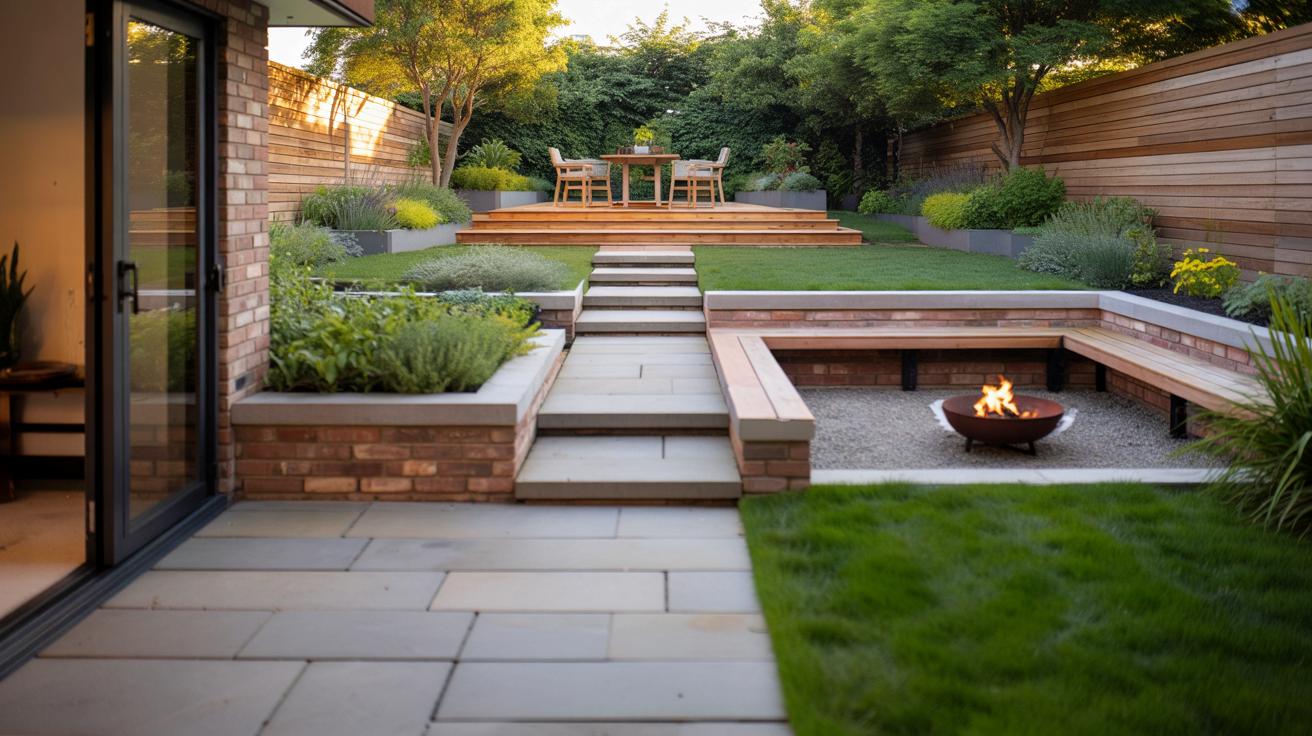
Then you notice your neighbour’s plot, just beyond the hedge. A raised deck, a sunken corner with a fire pit, a small flight of steps like a promise. Same size. Same light. Different courage. Something clicks.
Flat gardens are safe — and that’s the problem
Walk down any new-build street and you’ll see the same pattern. A row of clipped lawns laid like green carpets, patios clipped to the back doors, fences marching in straight lines on either side. Everything level, polite, predictable. *Nothing that could trip you up — or excite you.*
Developers love flat gardens because they’re fast to install and easy to sell. You can move your furniture in and call it done. The snag is that a garden without layers doesn’t give your brain much to play with. No shadows, no shifts in height, no corners that invite you to step closer. Just one big “already seen”.
Think about that friend whose garden you always remember. Chances are there’s a step down to a shady nook, or a raised corner where pots cluster like a tiny stage. One reader sent me a photo of her small city garden: 40 square metres, nothing special on paper. She added a brick-edged raised bed along one side and a single step up to a gravel seating area.
Suddenly there were two distinct zones instead of one flat rectangle. Guests now instinctively wander up to “the top”, then look back down as if they’re in a different place altogether. Same footprint, new story.
Our eyes crave changes in level the way our ears crave changes in volume. When everything is on one plane, the garden reads as one long, flat sentence. When you add a step, a low wall, a sunken bench, you create commas and exclamation marks in the landscape. The trick is that levels don’t have to be huge to feel bold.
Even a 20–30 cm difference can change the way you move and look. A slightly raised herb bed feels precious and intentional. A shallow lowered corner instantly feels like a hideout. **The real shift isn’t the soil — it’s your mindset.**
How to start playing with levels without wrecking the place
The easiest entry point is to stop thinking “big landscaping project” and start thinking “small stage”. Pick one area — near the terrace, in a corner you never use, along a dull fence — and decide it will be your first level change. Nothing heroic. Just one deliberate step up or step down.
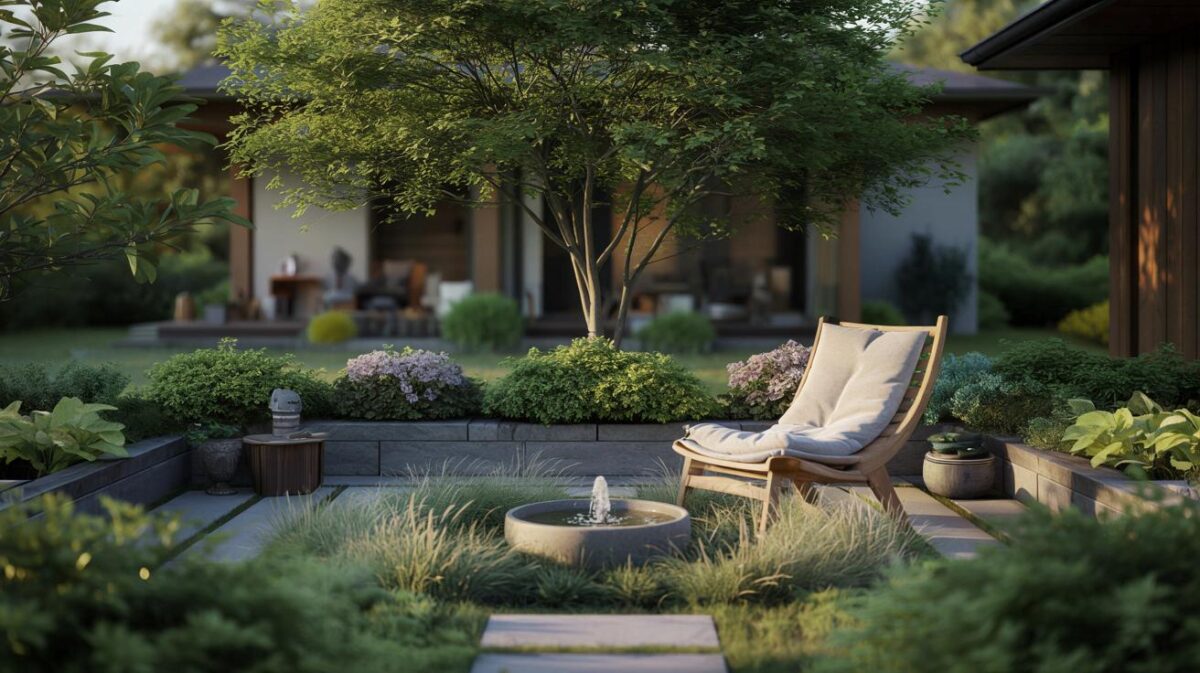
A raised bed made from sleepers or stacked bricks is often the gentlest move. Go for knee height or just below, so you can sit on the edge and rest a drink. Fill it with herbs, grasses, or a single small tree and you’ve instantly lifted the eye line. That edge becomes a natural meeting point, halfway between furniture and architecture.
If your garden slopes already, resist the urge to bulldoze it into submission. Work with what’s there. Terracing that slope into two or three shallow platforms often costs less in the long run than trying to force everything flat. And you end up with multiple “rooms” instead of one awkward football pitch.
Common mistake number one? Going too timid. A 5 cm “step” isn’t a level, it’s a trip hazard. Give each change in height a clear role: sit, stand, plant, or store. Common mistake number two: using too many different materials. That’s when things start to look like a garden centre display instead of a real home. Pick two main materials that match your house, then repeat them.
“Your garden is not an outdoor carpet. It’s a little landscape, and landscapes are never perfectly flat.”
— A landscaper told me this on a muddy February morning, while standing in what looked like a bomb site. Two months later, the ‘bomb site’ had become the most inviting split-level family garden on the street.
- Use one strong material for structure: brick, stone, timber sleepers, or poured concrete.
- Add one softer material to contrast: gravel, bark, or chunky pavers set in lawn.
- Keep steps generous, with deep treads and visible edges so they feel safe.
- Turn every low wall into seating by widening the top with a smooth coping stone.
- Repeat the same textures in two or three places so the garden feels coherent, not chaotic.
Materials, light, and tiny height changes that change everything
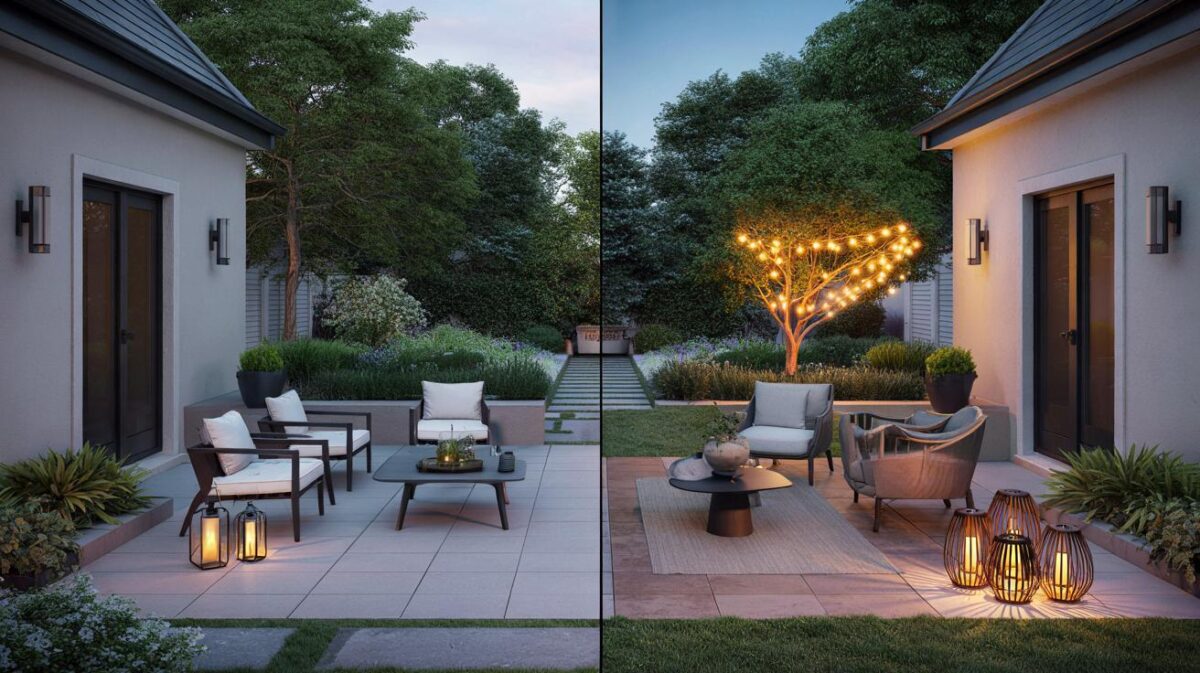
Once you start noticing levels, you also start noticing how materials catch the light. A rough stone riser throws a shadow at sunset. A white-painted retaining wall bounces brightness into a gloomy corner. A timber deck slightly raised from the lawn feels like a raft, even if it’s only 15 cm off the ground.
We’ve all been there, that moment when you see a photo of a “before and after” garden and the only real change is a simple platform and a couple of steps. And suddenly it looks like a lifestyle Pinterest board. The boldness isn’t money, it’s the decision to stop treating the garden as a flat extension of the living room floor.
Let’s be honest: nobody really measures every perfect proportion before picking up a shovel. Most successful gardens grow through a series of brave experiments. You add one raised bed, live with it, then decide the far corner deserves its own little terrace. You try a gravel step and realise you prefer brick, so you change it the year after.
**The only real mistake is doing nothing because you’re scared of getting it wrong.** The soil will forgive you. Plants will move. A timber sleeper can be unscrewed and shifted. What stays with you is the pleasure of walking out of the back door and choosing: up or down, here or there, sun or shade.
What if you thought of your flat garden as a blank stage set waiting for props and platforms? One small level change this season. Another next year. A different material underfoot in just one area. The garden starts to break into scenes, and your daily routine shifts with it.
You might drink your morning coffee on the raised corner to catch the first light, then slip down into a sunken bench after work, tucked away from the neighbours’ windows. **Height gives you privacy, mood, and the illusion of space — even when the fence line hasn’t moved a millimetre.** And once you’ve taken the first bold step, the flatness you lived with for years starts to feel like a missed opportunity you’re finally correcting.
| Key point | Detail | Value for the reader |
|---|---|---|
| Use simple level changes | Introduce one raised bed, deck, or sunken corner instead of flattening everything | Instant character without a full redesign or huge budget |
| Limit your materials | Choose one structural material and one softer surface, then repeat them | A coherent, “designed” look that still feels personal and relaxed |
| Turn walls and steps into features | Design steps that are wide and safe, use low walls as seating, and play with light | More usable space, more comfort, and a garden that draws you outside |
FAQ:
- How much height difference do I need for my garden to feel different?Even 20–30 cm is enough to create a sense of separation between zones. A single step, a low wall, or a slightly raised deck can completely alter how you move through the space.
- Do I need a landscaper to add levels?Not always. Small raised beds, simple platforms, or a shallow sunken seating area can be DIY projects. For major retaining walls or big slopes, it’s wise to get professional advice.
- What materials age best outdoors?Brick, stone, and quality hardwoods tend to weather gracefully. Concrete sleepers and composite decking are hardy but give a different, more contemporary look. Match the style of your house.
- Will level changes make my garden harder to maintain?They often reduce maintenance. Raised beds are easier on your back and can be densely planted to suppress weeds. Hard surfaces around seating areas cut down on mowing.
- Isn’t a flat garden safer for kids and older people?Clear, generous steps with good edges are usually safer than subtle, accidental slopes. You can design gentle transitions and handholds so everyone moves confidently between levels.